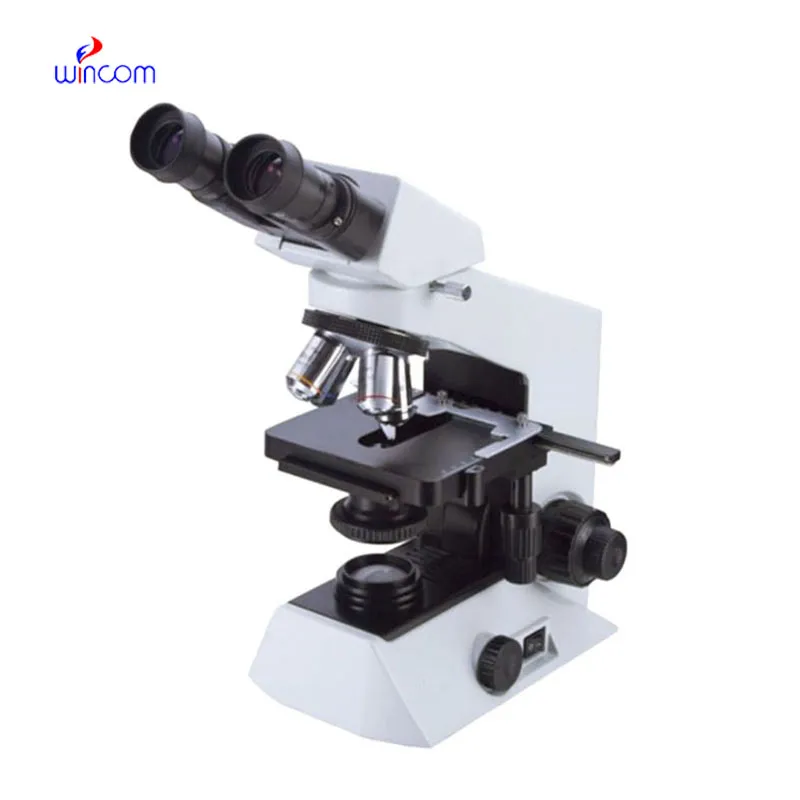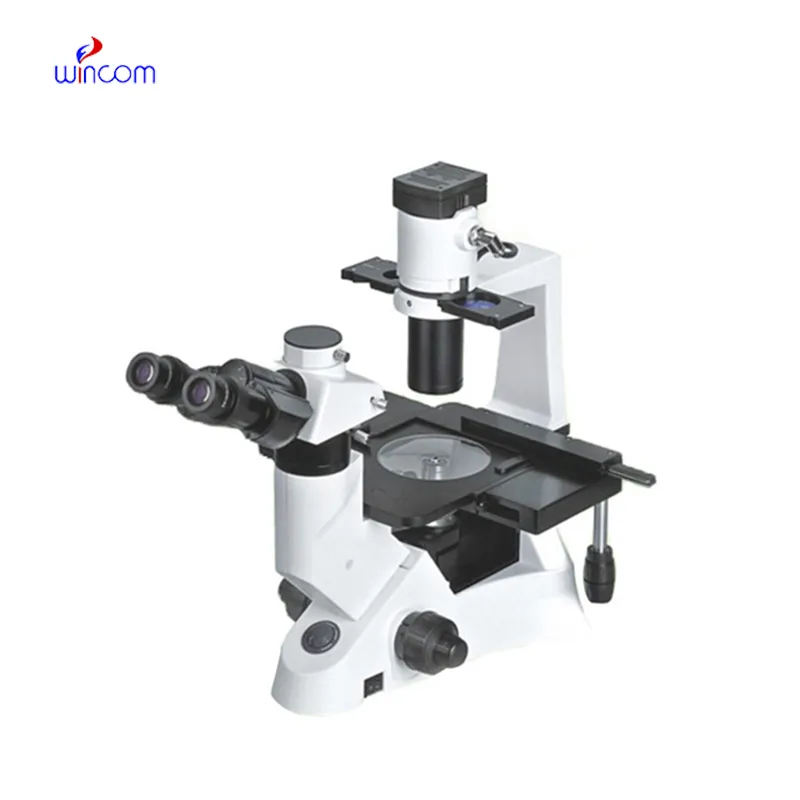
Every feature of the measuring microscope is built to provide maximum viewing accuracy and comfort to the user. The coarse and fine focus of the microscope provide control to observe large and small specimens. The measuring microscope has enhanced illumination technology to give balanced light conditions to highlight color contrasts and fine details. It has also got compatibility with digital imaging software for analysis and documentation to allow researchers to store and compare results efficiently.

Applications of the measuring microscope cross into different spheres. It enables disease diagnosis by examining tissue sample and blood smears in medicine. In materials science, the measuring microscope is employed to examine crystal structures, coatings, and composites. In life sciences research, it is used in visualization of cell morphology, patterns of growth, and intracellular action. The measuring microscope also offers quality inspection for production with precision in semiconductor fabrication and microfabrication. It is used in museums and conservation laboratories to examine pigments and fibers in artifacts from ancient times.

The next generation of the measuring microscope will merge optics with digital intelligence. Artificial intelligence and machine learning algorithms will interpret complex images automatically, allowing scientists to identify microscopic structures faster. Improved ergonomic interfaces that are more human-friendly and voice-controlled interfaces will improve the interaction with the microscope for the users. The measuring microscope will also be equipped with environmental sensors to provide stability and precision in the functioning. With the integration of virtual reality, scientists are now able to explore micro-worlds in interactive three-dimensional environments, expanding visual research boundaries.

The measuring microscope has the strength of longevity, which is dependent on the right handling and maintenance by cleaning regularly. Clean the eyepieces, objectives, and stage with accepted lens paper after each use. Remove all slides and samples prior to shutdown. The measuring microscope should be stored in a cool, dry place to avoid corrosion and mold. Check screws and mechanical joints for support at intervals. The electrical components, such as the power supply unit and light source, should be inspected frequently to ensure safe operation.
The measuring microscope allows researchers to study the world at a microscopic level with stunning detail. Using high-tech optical or electron systems, the measuring microscope magnifies samples to reveal texture, layers, and details that are imperceptible to the human eye. From life sciences to factory quality control, uses span the range. Portable and compact models now combine ergonomic design and digital controls to offer comfort, accuracy, and dependability for extended observation periods.
Q: What is a microscope used for? A: A microscope is used to magnify tiny objects or structures, allowing detailed observation of cells, microorganisms, and materials that are invisible to the naked eye. Q: How often should a microscope be calibrated? A: To maintain measurement accuracy and ensure accurate focus during research or analysis, regular calibration should be performed, typically once or twice a year. Q: What type of light source is commonly used in a microscope? A: Most modern microscopes use LED or halogen light sources, which provide stable light and adjustable brightness for clear images at a wide range of magnifications. Q: Can a microscope be connected to a computer? A: Yes, many microscope models feature USB or HDMI ports that allow image capture and digital display through specialized imaging software. Q: How should a microscope be stored when not in use? A: A microscope should be covered with a dust shield and stored in a cool, dry location to prevent contamination and protect optical components from humidity.
The centrifuge operates quietly and efficiently. It’s compact but surprisingly powerful, making it perfect for daily lab use.
The water bath performs consistently and maintains a stable temperature even during long experiments. It’s reliable and easy to operate.
To protect the privacy of our buyers, only public service email domains like Gmail, Yahoo, and MSN will be displayed. Additionally, only a limited portion of the inquiry content will be shown.
We’re interested in your delivery bed for our maternity department. Please send detailed specifica...
We are planning to upgrade our imaging department and would like more information on your mri machin...
E-mail: [email protected]
Tel: +86-731-84176622
+86-731-84136655
Address: Rm.1507,Xinsancheng Plaza. No.58, Renmin Road(E),Changsha,Hunan,China


 EN
EN
 af
af
 es
es
 ar
ar
 tr
tr
 sw
sw
 pt
pt
 th
th
 ur
ur
 bn
bn
 ne
ne
 vi
vi
 km
km
 lo
lo
 de
de
 ru
ru
 fi
fi
 nl
nl
 fa
fa
 fr
fr
 ko
ko