
The compound microscope lab distributer pairs simple controls and precise optical alignment for smooth switching between magnifications. distortion is minimized and depth perception is enhanced with quality glass lenses. a sturdy frame and vibration-dampening base contribute to stable imaging, even under extensive use. The compound microscope lab distributer features integral LED illumination with adjustable intensity for precise light control, providing crisp and clear viewing of biological or material samples for research and educational studies.

The compound microscope lab distributer is applied widely in biology for studying cells, tissues, and microorganisms with unmatched clarity. Clinically, it is applied to assist in the diagnosis of infections, blood diseases, and cell disorders. In industry, the compound microscope lab distributer is employed for material examination, surface flaw detection, and microstructure analysis of metals and polymers. In institutions of learning, it is a teaching tool that helps students learn microscopic anatomy and chemical reactions. Its use extends into environmental monitoring where it is used to analyze soil or water samples to ascertain quality and detect pollutants.

Future technology is revolutionizing the future of the compound microscope lab distributer, focusing on automation, high speed, and visualization. New-generation models will be provided with sophisticated image-processing algorithms to process information in real time. The compound microscope lab distributer will likely utilize adaptive optics for improved imaging at higher magnifications, both to the advantage of biological and materials research. Handheld and portable versions will become standard, bringing microscopic study to the location. With growing demands for sustainability, energy-saving compound microscope lab distributer versions will also run laboratories worldwide.
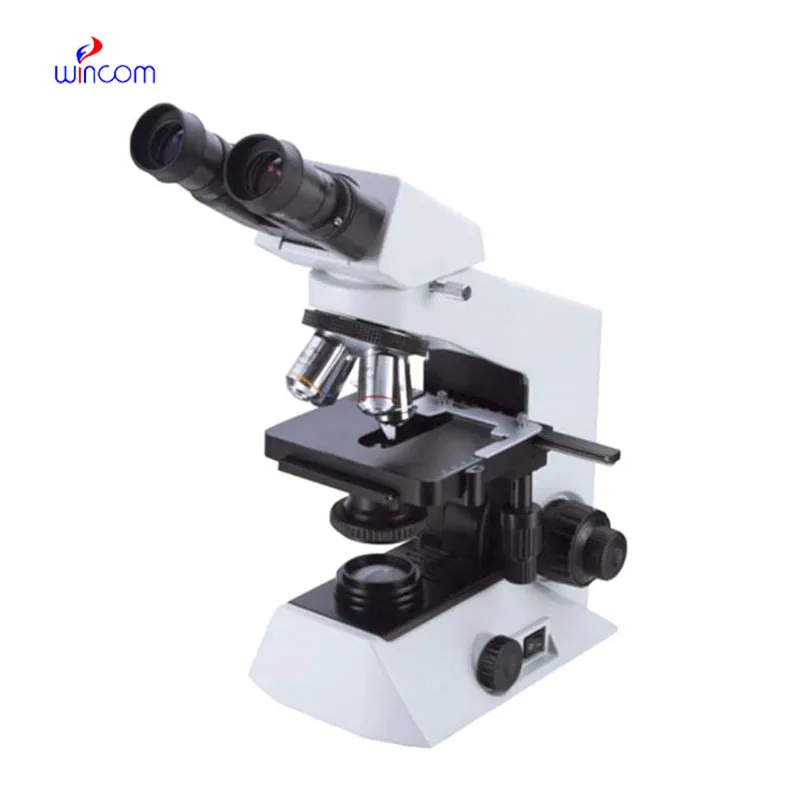
Users should implement a routine maintenance plan to ensure the compound microscope lab distributer remain in excellent working condition. Clean all optical parts using a blower or soft brush initially before a thorough cleaning. Do not disassemble the instrument at any time save by qualified individuals. Use light lubricant on moving parts to prevent stiffness and wear. The compound microscope lab distributer should be kept in a chemical fume and moisture-free environment. Power cables and lighting systems should be checked regularly for signs of premature deterioration or breakdown.
A compound microscope lab distributer is a convenient tool that magnifies microscopic materials that are invisible to the naked eye. It allows researchers, scientists, and students to view cells, microorganisms, and sensitive materials with careful attention at microscopic sizes. Modern compound microscope lab distributer models combine optical precision with electronic technology to give high-definition images and fine focusing. They are widely applied in biology, medicine, and material sciences for research, study, and instruction. With high-performance lenses and illumination systems, a compound microscope lab distributer enhances visualization to enable users to examine texture, shape, and structure at the microscopic level with utmost clarity and accuracy.
Q: What are the main parts of a microscope? A: The key components include the eyepiece, objective lenses, stage, focusing knobs, and illumination system, all working together to magnify and clarify specimens. Q: How do you clean the lenses of a microscope? A: Lenses should be cleaned using soft lens paper or microfiber cloth with a small amount of lens cleaner to avoid scratching or damaging optical coatings. Q: What magnification levels can a microscope achieve? A: Depending on the model, a microscope can typically achieve magnifications ranging from 40x to over 1000x for detailed observation of microscopic structures. Q: Why is light adjustment important in a microscope? A: Proper light adjustment ensures accurate contrast and brightness, allowing clear observation without distortion or glare during viewing. Q: Can a microscope be used for educational purposes? A: Yes, microscopes are widely used in classrooms and laboratories to teach students about biology, materials science, and microscopic analysis.
I’ve used several microscopes before, but this one stands out for its sturdy design and smooth magnification control.
The centrifuge operates quietly and efficiently. It’s compact but surprisingly powerful, making it perfect for daily lab use.
To protect the privacy of our buyers, only public service email domains like Gmail, Yahoo, and MSN will be displayed. Additionally, only a limited portion of the inquiry content will be shown.
I’m looking to purchase several microscopes for a research lab. Please let me know the price list ...
Hello, I’m interested in your water bath for laboratory applications. Can you confirm the temperat...
E-mail: [email protected]
Tel: +86-731-84176622
+86-731-84136655
Address: Rm.1507,Xinsancheng Plaza. No.58, Renmin Road(E),Changsha,Hunan,China


 EN
 af
 es
 ar
 tr
 sw
 pt
 th
 ur
 bn
 ne
 vi
 km
 lo
 de
 ru
 fi
 nl
 fa
 fr
 ko