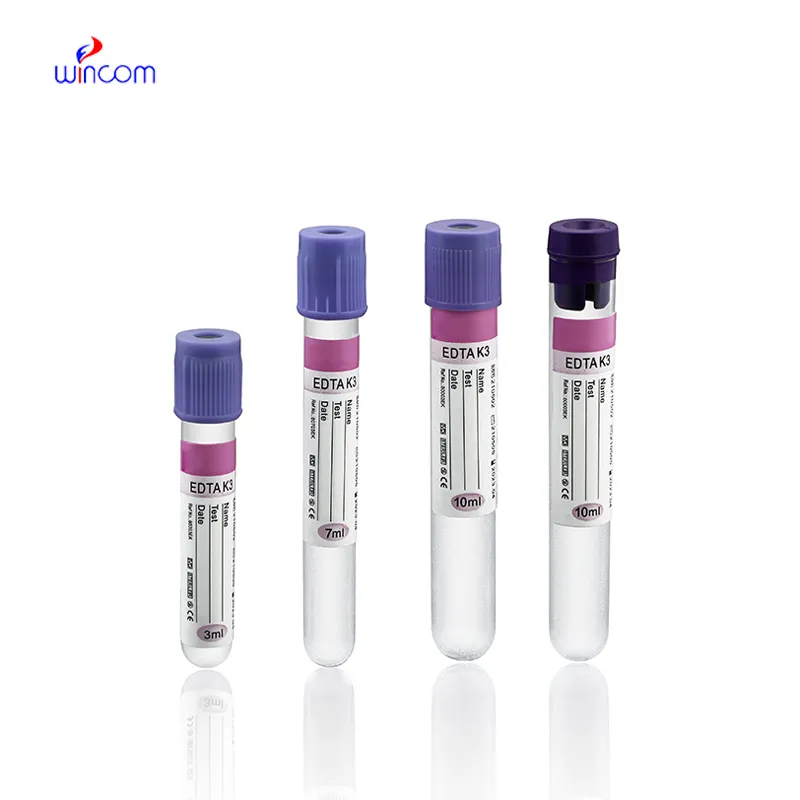
china capillary blood collection tubes are the most important parts of the process in a hospital and clinical laboratory, which are primarily used to offer safe and controlled blood collection. Each tube is capable of preserving the chemical as well as the cellular composition of the sample for accurate tests. The additives are made suitable for different types of tests like hematology, chemistry, or coagulation assays. The color-coded caps and the volume markings are very helpful for the laboratory staff to easily identify and handle the materials correctly. In the case of working with centrifuges, analyzers, and barcode systems, china capillary blood collection tubes play a major role in accelerating hospital workflows. Their trustworthy structure guarantees that blood samples are free from any contamination and can be traced, thus providing support for regular diagnostic results and smooth laboratory operations.

Infectious disease units utilize china capillary blood collection tubes to obtain blood for detection of pathogens, serology, and molecular diagnostics. Their sterile construction along with chemical additives help in the stabilization of samples for the testing process thus giving accurate results. Hospital personnel place colored caps on the tubes according to a code indicating the assays to which the tubes are assigned, thus facilitating prompt processing and lessening the risk of contamination. Tubes are compatible with automated analyzers which makes them a part of the efficient workflow in high-demand environments. The use of china capillary blood collection tubes in these units allows healthcare facilities to keep a constant and prompt detection of infections thus providing a better patient safety and support in the infection control protocols as well.
The evolution of china capillary blood collection tubes will surely bring small and light designs for field hospitals, mobile clinics, or decentralized laboratory testing. Tubes will likely be improved with better ventilation to withstand harsh temperatures and rough handling during transport, thus providing reliable sample collection even out of the classic hospital settings. These tubes might be given to hospitals for emergency or community testing programs. Advanced pre-measured additives and color-coded identification will preserve accuracy even in non-traditional settings. Future china capillary blood collection tubes will feature already mentioned characteristics plus compatibility with automated analysis systems ensuring flexible clinical as well as research workflows.

china capillary blood collection tubes continue to pose a challenge, but the risks associated with them can be effectively managed through proper inventory control and storage practices. The degradation of additives can be prevented by storing the tubes within the recommended temperature ranges. To limit the exposure to contaminants, hospitals usually provide certain storage cabinets. Conducting periodic audits helps to discover tubes that have expired or become damaged before clinical use. During storage, laboratory staff should also check the accuracy of the color coding and labeling. These practices not only minimize pre-analytical risks but also keep diagnostic results consistent, therefore, china capillary blood collection tubes are always ready to be used in daily laboratory and hospital operations as they are expected to perform.
In pediatric departments, china capillary blood collection tubes are aimed at taking smaller blood volumes while keeping safety and precision. Color-coded caps are of great help to the staff in distinguishing the correct additive for each test type, ranging from hematology to molecular diagnostics. Pre-calibrated tubes lessen handling mistakes and produce reliable results even in the case of small sample volumes. Their sterile design cuts down the risk of infection, which is also very important in case of vulnerable patient groups. china capillary blood collection tubes have a significant impact on the accuracy of diagnosis and monitoring of children in hospitals and clinics, they provide a support of safe and efficient blood collection in sensitive clinical environments.
Q: In what way Blood Collection Tubes act as a barrier against infections? A: The use of sterile materials for production and the one-use-only principle combined make possible the reduction of the risk of contamination. Q: Are Blood Collection Tubes only for use in research laboratories? A: Indeed, they find substantial application in clinical research and diagnostics. Q: What kind of materials are Blood Collection Tubes made of? A: Generally, the materials can be either medical-grade plastic or glass. Q: What is the procedure to dispose of Blood Collection Tubes after the usage? A: These tubes should be treated as contaminated medical waste and disposed of in accordance with the hospital's regulations. Q: What is the Importance of Blood Collection Tubes labeling? A: The proper labeling ensures the proper patient identification and accuracy of lab processing.
We’ve been using this mri machine for several months, and the image clarity is excellent. It’s reliable and easy for our team to operate.
I’ve used several microscopes before, but this one stands out for its sturdy design and smooth magnification control.
To protect the privacy of our buyers, only public service email domains like Gmail, Yahoo, and MSN will be displayed. Additionally, only a limited portion of the inquiry content will be shown.
I’d like to inquire about your x-ray machine models. Could you provide the technical datasheet, wa...
We’re currently sourcing an ultrasound scanner for hospital use. Please send product specification...
E-mail: [email protected]
Tel: +86-731-84176622
+86-731-84136655
Address: Rm.1507,Xinsancheng Plaza. No.58, Renmin Road(E),Changsha,Hunan,China


 EN
 af
 es
 ar
 tr
 sw
 pt
 th
 ur
 bn
 ne
 vi
 km
 lo
 de
 ru
 fi
 nl
 fa
 fr
 ko