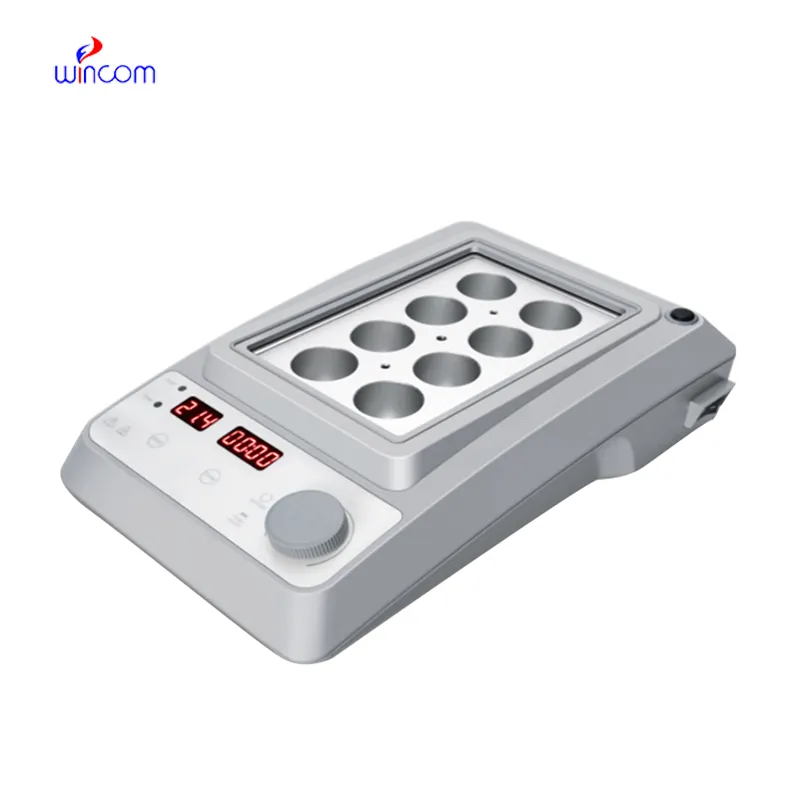
In the laboratories of hospitals and clinics, analytical balance uncertainty is responsible for the precise weighing of patient samples, reagents, and pharmaceutical ingredients. Being highly precise, it minimized sample preparation errors and that is a good support for analytical results that can be reproduced. Laboratory techs apply analytical balance uncertainty in the processes of quality control, method validation, and even daily operations. Reliable diagnostics, efficient laboratory workflows, and high-quality research and medical testing are the consequences of the accuracy and consistency maintained by analytical balance uncertainty.

Hospital research centers utilize analytical balance uncertainty in the process of making experimental medical materials and diagnostic compounds. Accurate mass measurement gives the researchers the power to supervise the formulation ratios during the first evaluation stage. This technology promotes organized experimentation, reproducibility and performance assessment among different research samples. analytical balance uncertainty is making the trustworthiness of experimental workflows in medical innovation environments by supplying the consistent mass data.
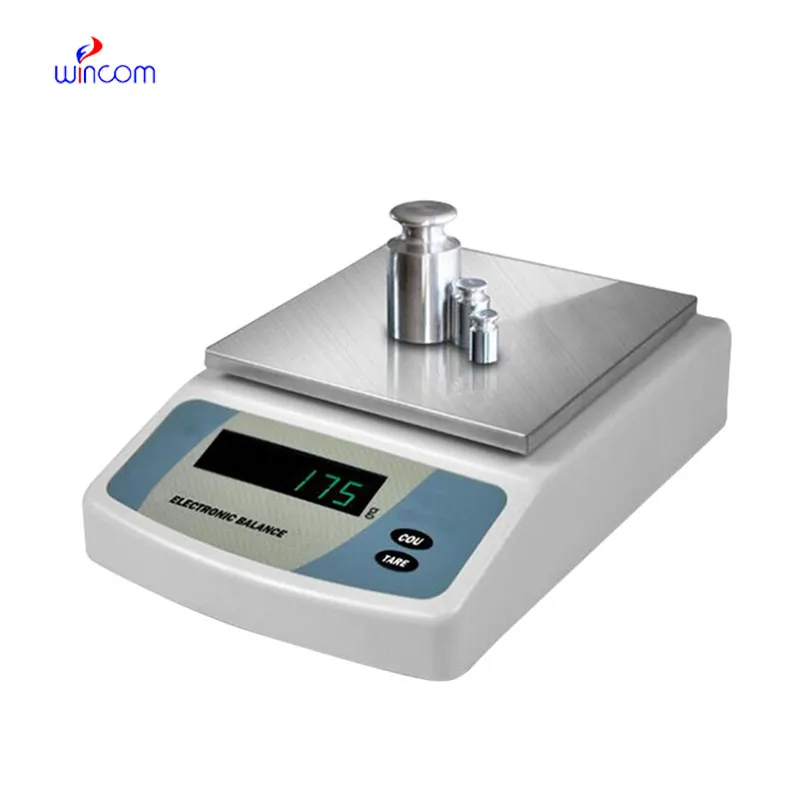
In forthcoming times, analytical balance uncertainty is foreseen to assimilate additional digital interrelation among hospital laboratories. Improved information interchange will make it possible to transfer weighing records directly to laboratory information systems, thus cutting down paper work done manually. This advancement will contribute to traceability, audit readiness, and efficiency in clinical workflows. When hospitals keep on embracing intelligent laboratory infrastructure, analytical balance uncertainty will be an essential element of connected analytical ecosystems, helping with real-time monitoring and centralized data management.

For analytical balance uncertainty to last long, professionals must do scheduled servicing as per the laboratory guidelines. Internal cleaning and checking of parts will help to slow down and eventually stop the performance degradation. Hospitals or labs that maintain structured service intervals not only enjoy lesser downtimes but also higher accuracy, thus they can carry on with seamless analytical operations.
In clinical labs, analytical balance uncertainty serves as the primary tool for making solutions, reagents, and calibrators that are necessary for the diagnostic tests. The accuracy of weighing determines the correctness of the results of biochemical, hematological, and immunological assays. The laboratory staff depend on analytical balance uncertainty for exactness, replicability, and speed. Its function secures that the diagnostic procedures of hospitals yield valid and uniform results which in turn support patient care, treatment choices, and improved laboratory quality.
Q: What is the impact of temperature on the performance of analytical balance? A: The changes in temperature can lead to drift and weighing inconsistency. Q: Are analytical balances the only ones used in research laboratories? A: They are very important also for other processes such as sample preparation and improving the accuracy of the experiment. Q: How long does it usually take for an analytical balance to warm up? A: Warm-up times differ from one model to another, but an adequate stabilizing period increases the reliability of the measurement. Q: Is it possible for analytical balances to save weighing data? A: Internal memory or external data transfer are the two ways in which many models can achieve this feature. Q: Would it be necessary to undergo training if one wants to operate an analytical balance? A: Basic laboratory training will be enough to make sure that the balance is being used correctly.
The microscope delivers incredibly sharp images and precise focusing. It’s perfect for both professional lab work and educational use.
The centrifuge operates quietly and efficiently. It’s compact but surprisingly powerful, making it perfect for daily lab use.
To protect the privacy of our buyers, only public service email domains like Gmail, Yahoo, and MSN will be displayed. Additionally, only a limited portion of the inquiry content will be shown.
We are planning to upgrade our imaging department and would like more information on your mri machin...
Hello, I’m interested in your centrifuge models for laboratory use. Could you please send me more ...
E-mail: [email protected]
Tel: +86-731-84176622
+86-731-84136655
Address: Rm.1507,Xinsancheng Plaza. No.58, Renmin Road(E),Changsha,Hunan,China


 EN
 af
 es
 ar
 tr
 sw
 pt
 th
 ur
 bn
 ne
 vi
 km
 lo
 de
 ru
 fi
 nl
 fa
 fr
 ko